
How to Use a Coffee Grinder: Step-by-Step Guide
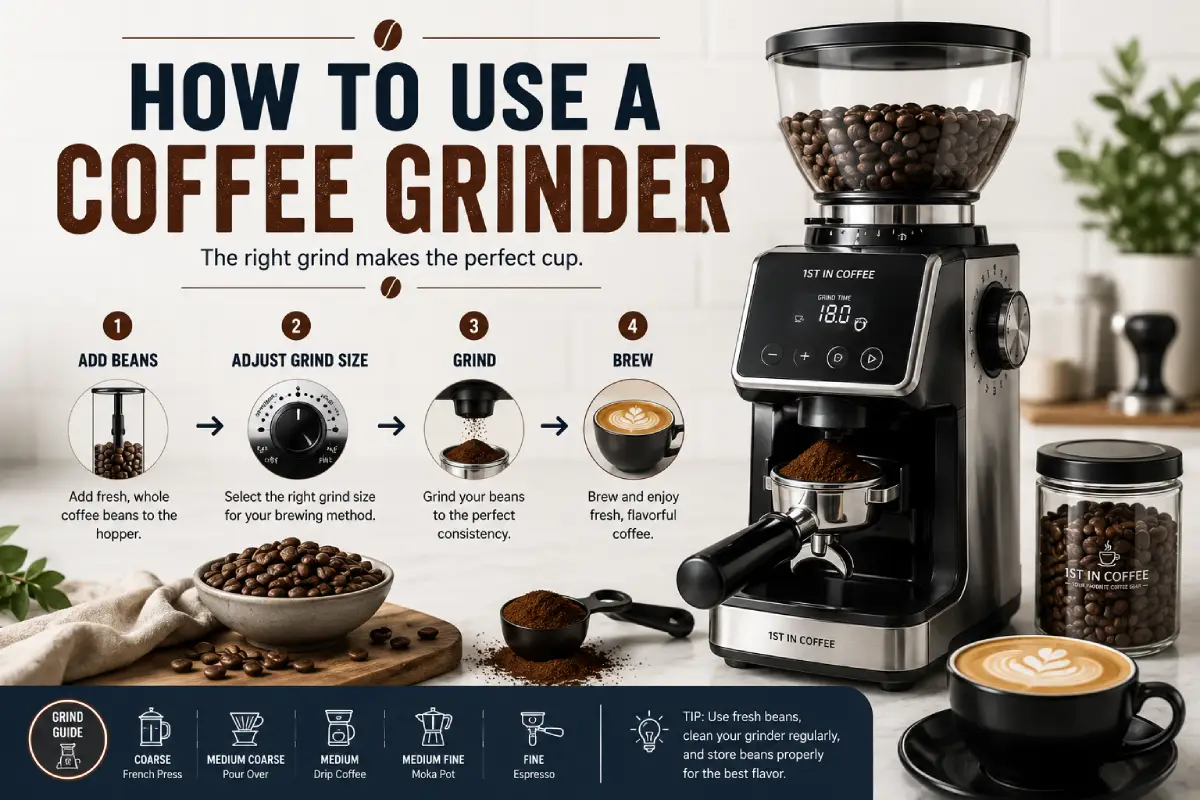
Table of Contents
- What a Coffee Grinder Does
- Types of Coffee Grinders
- How to Use a Coffee Grinder Step by Step
- Coffee Grind Size by Brewing Method
- How to Adjust Your Coffee Grinder
- Common Coffee Grinding Mistakes to Avoid
- How to Clean a Coffee Grinder
- Features to Look for in a Coffee Grinder
- When to Upgrade Your Coffee Grinder
- Frequently Asked Questions About Using a Coffee Grinder
You buy a bag of specialty beans, follow the recipe exactly, and the coffee still tastes flat. The beans aren’t the problem. It’s usually the grinder itself.
Most people overlook coffee grinding entirely, assuming any grinder will do the job, but grind size controls extraction rate, body, bitterness, and aroma simultaneously. A setting that’s even slightly off can turn quality coffee beans into a disappointing cup, no matter how good the brew method or coffee maker behind it.
Knowing how to use a coffee grinder properly changes that entirely. This guide covers grinder types, the full step-by-step process, how to match grind size to your brewing methods, and what to do when your coffee still doesn’t taste right.
What a Coffee Grinder Does
A grinder breaks roasted coffee beans into particles sized for a specific brew method. Particle size controls how fast water pulls flavor from the coffee, and that directly shapes what ends up in your cup.
Here’s what most people miss about why this matters.
Whole Beans vs. Ground Coffee
Freshly ground coffee tastes noticeably different from pre-ground coffee. The reason is oxidation. Freshly ground beans start losing aroma and flavor the moment they’re cut open. Pre-ground coffee is already stale by the time it reaches your coffee maker, and it’s typically prepared for the drip method only.
Grinding your own coffee beans right before brewing coffee gives you control over grind size that no bag of pre-ground coffee can match.
Grind Size and Extraction
Grind size determines how quickly water pulls soluble compounds from ground coffee. Too fine and you over-extract, producing bitterness. Too coarse, and you under-extract, leaving your coffee sour and thin. Matching the grind to the brew method is what keeps you in the right extraction window.
Types of Coffee Grinders
There are two primary types of coffee grinders: blade grinders and burr grinder models. Each handles coffee beans differently, and that difference shows up directly in the cup.
Here’s a practical comparison of each type.
Blade Grinders
Blade grinders chop beans with spinning blades rather than crushing them. They sit at a lower price point and work fine for casual filter coffee. The tradeoff is inconsistency. Chopping produces uneven particle sizes, and friction generates heat that can alter the coffee’s flavor. For espresso, they fall short.
Burr Grinders
A burr grinder crushes beans between two abrasive surfaces, producing consistent particles that extract properly across all brewing methods. That consistency matters most for espresso and any method sensitive to grind uniformity. Burr grinders break down further into flat and conical burr grinder designs.
Both outperform blade options in terms of precision and flavor clarity. As the Specialty Coffee Association notes in its brewing standards, grind consistency is one of the most controllable variables in achieving repeatable extraction quality.
Manual Grinders
A manual burr grinder uses hand power instead of a motor. Compact, quiet, and travel-friendly. Good for a single morning cup, but not practical for large amounts of coffee.
Electric Grinders
An electric grinder handles daily volume without effort. Faster, more consistent, and easier to dial in across different brew methods. For most home users, it’s the practical choice.
How to Use a Coffee Grinder Step by Step
Each step in this process affects the result. Here’s the full sequence from beans to brew.
Measure the Beans
Weigh your beans before grinding. A scale gives you a repeatable dose every time. The general rule for most brewing methods is roughly 1 to 2 grams of coffee per ounce of water, though this shifts by machine and personal taste.
Select the Grind Size
Match the grind size to your brew method before the beans go in. Locking in the right setting first means you’re not guessing after the fact.
Add the Beans
Pour only the optimal amount you need for the current brew. Don’t load all the beans into the hopper. Storing beans there exposes them to air and light, which degrades flavor faster than most people expect.
Grind the Coffee
For a burr grinder or electric grinder, start the machine and let it run the full dose. For a manual burr grinder, turn the handle steadily. For blade grinders, press in short bursts and give the grinder a gentle shake to redistribute the beans for a more even chop. Don’t remove the lid mid-grind.
Check the Texture
Look at and feel the ground coffee before brewing. Espresso grounds should feel like powdered sugar. French press grounds should feel coarse and gritty. If the texture doesn’t match, adjust the grind settings before you brew.
Brew Immediately
Freshly ground coffee starts oxidizing the moment grinding stops. Use the grounds right away. Letting them sit on the counter while you prep everything else costs you the aroma you ground for in the first place.
Coffee Grind Size by Brewing Method

Grind settings vary by grinder model and should always be adjusted by taste. These are starting points, not fixed rules.
Here’s a quick reference to the most common brewing methods.
| Brew Method | Grind Size | Texture Reference |
| Turkish coffee | Extra fine | Finer than powdered sugar |
| Espresso | Very fine | Like powdered sugar |
| Moka pot | Fine to medium-fine | Finer than table salt |
| Pour over | Medium to medium-fine | Like fine sea salt |
| Filter coffee/drip French | Medium grind | Like coarse sand |
| French press | Coarse grind | Like raw sugar |
| Cold brew | Extra coarse | Like coarse sea salt |
How to Adjust Your Coffee Grinder
Small grind adjustments fix most flavor problems. Make one change at a time and taste after each brew.
Here’s how to diagnose and correct the most common issues.
- If Coffee Tastes Sour: Sourness means under-extraction. Grind finer to slow water flow and increase contact time with the grounds.
- If Coffee Tastes Bitter: Bitterness means over-extraction. Go coarser to let water move through faster and reduce extraction.
- If Espresso Runs Fast: A shot pulling under 20 seconds usually means the grind is too coarse. Dial in finer and check dose and tamp consistency.
- If Espresso Runs Slow: A shot over 35 seconds points to a grind that’s too fine. Go coarser and check your puck prep.
Common Coffee Grinding Mistakes to Avoid
A few habits quietly undermine even a solid setup. Here are the ones that affect flavor most.
Grinding Too Early
Ground coffee loses its best flavor within minutes of grinding. Grind right before you brew, every time.
Using the Wrong Grind
A coarse grind in an espresso machine produces a watery, sour shot. A fine grind in a French press yields muddy coffee. A mismatched grind size and brew method is one of the most common reasons coffee tastes wrong.
Overfilling the Hopper
Storing all the beans in the hopper exposes them to air every time the lid opens. Keep beans in an airtight container and add only what you need per session.
Ignoring Grinder Cleaning
Old coffee oils and fines accumulate and go rancid over time, adding a stale note to every brew. This also applies if you’ve ever used the grinder for spices; flavor transfer is real and affects taste more than most people expect.
How to Clean a Coffee Grinder
Clean equipment produces cleaner-tasting coffee. Here’s the approach for each type.
Burr Grinder Cleaning
Remove the burrs if possible and brush out retained grounds. Run grinder cleaning tablets through the machine to clear oils from the burrs. Always follow the manufacturer’s manual before using any cleaning product.
Blade Grinder Cleaning
Unplug first, then wipe the interior with a dry cloth or soft brush. A slightly damp cloth handles stubborn residue, but the interior must be fully dry before the next brew.
Cleaning Frequency
For daily use, a quick brush-out every one to two weeks keeps things running well. A deeper clean monthly handles oil buildup. Occasional users can clean every few sessions.
Features to Look for in a Coffee Grinder
1st in Coffee stocks a full range of coffee grinders alongside its espresso machine lineup. The same principle applies to both: the quality of the core mechanism matters more than the spec sheet.
Here’s what to prioritize.
Grind Settings
More grind settings make it easier to fine-tune your brew across different grind sizes and methods. This matters most for espresso, where small adjustments produce meaningfully different results. A grind-and-brew coffee maker integrates grinding and brewing into a single unit, saving counter space and simplifying the workflow.
Burr Quality
Burr material and design affect both consistency and durability. Quality burrs produce uniform particles across the range; that’s what enables precise adjustments and repeatable results.
Dosing Controls
Weight-based dosing is the most accurate. Timed dosing is convenient. Manual dosing gives the most control but requires a consistent technique. Match the dosing style to the level of hands-on you want in the process.
Size and Noise
Counter space and daily-use comfort matter. An espresso machine with a built-in grinder saves space. A standalone burr grinder generally offers better grind settings and burr quality at the same price point.
When to Upgrade Your Coffee Grinder
A grinder upgrade often improves coffee quality more visibly than upgrading the coffee maker. Here are the clearest signs yours is holding you back.
Inconsistent Grounds
If your coffee tastes different from brew to brew with the same beans, uneven particle size from worn or low-quality burrs is usually the cause.
Limited Settings
If you can’t dial in your espresso without jumping past the target grind, the grinder lacks the range for precise adjustments at the fine end.
Daily Use Needs
Frequent use wears down cheaper burrs faster than most people expect. A dedicated quality burr grinder or ground espresso bean setup handles daily volume without sacrificing consistency over time.
Frequently Asked Questions About Using a Coffee Grinder
Here are answers to the questions most new grinder owners ask first.
How long should you grind coffee beans?
It depends on the grinder type, dose, and target grind size. A burr grinder runs until the dose is processed. A blade grinder typically needs 10 to 30 seconds with a gentle shake mid-grind.
Is a burr grinder better than a blade grinder?
For consistency and flavor, yes. A burr grinder produces uniform particles that extract properly across all brew methods. Blade grinders chop unevenly and generate heat that affects taste.
Should you grind coffee beans every day?
Grinding fresh daily is the best way to preserve aroma and flavor from your whole beans. Pre-grinding ahead is convenient but always costs some flavor.
Can you grind coffee too fine?
Yes. Grounds that are too fine cause over-extraction and bitterness. In an espresso machine, they can also clog the machine and stall the shot. Always match fine grind levels to methods that call for them.
The Author