How to Use a French Press to Brew Perfect Coffee?
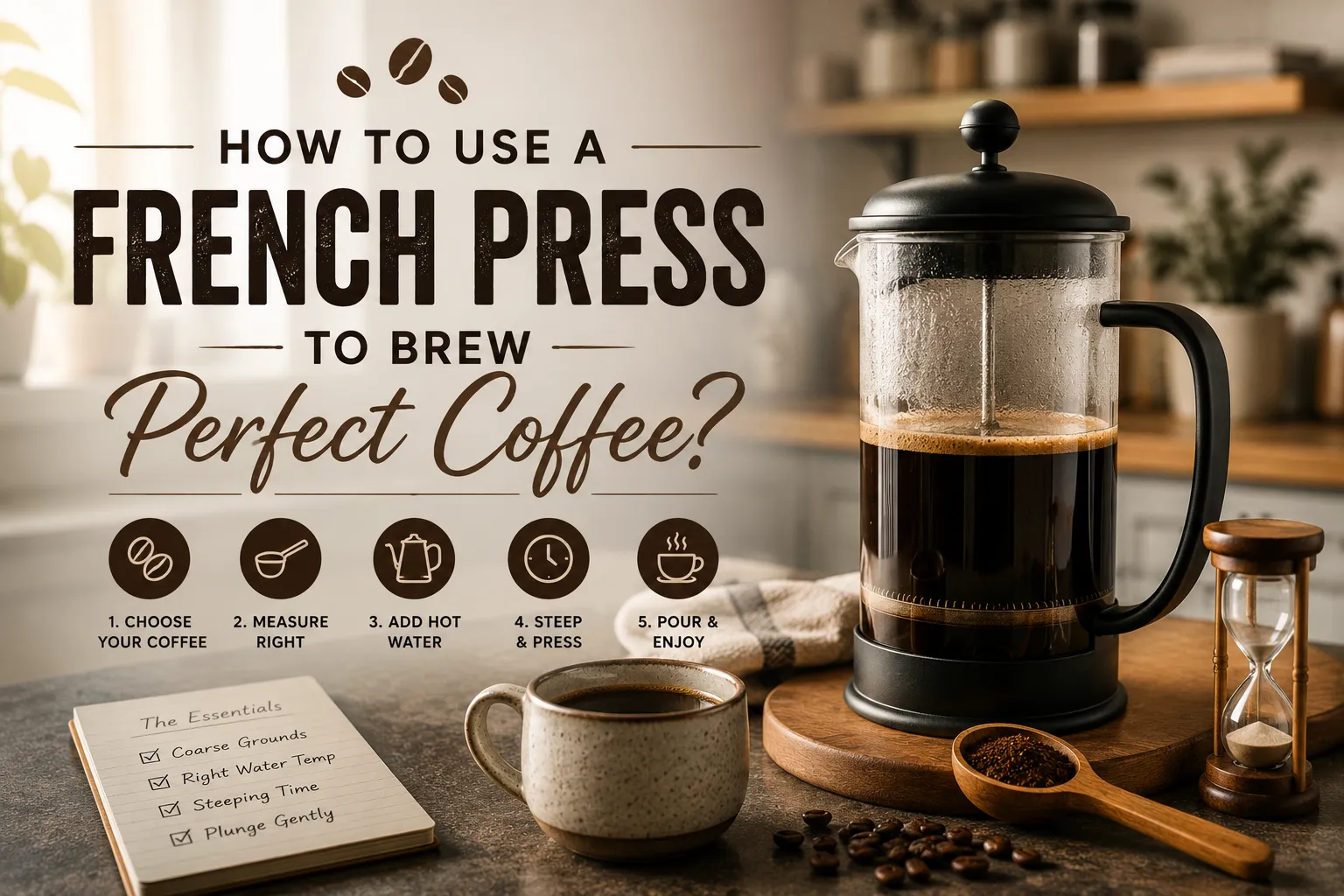
A French press is a manual immersion brewing device that lets coffee steep in hot water before a metal mesh filter separates the brewed liquid from the grounds. Coffee lovers reach for it because the brewing method produces a fuller, full-bodied cup that paper filters can’t match. Learning how to use a French press is more about technique than gear, which is part of why it’s stayed popular for decades.
The richer flavor comes from oils that paper filters strip out but the press keeps in. The brewing process is also simple, which makes it forgiving for beginners and faster than fussing with espresso machines or coffee makers loaded with buttons. This step-by-step guide walks through the equipment you need, the brewing steps that actually matter, the most common mistakes that ruin a brew, and a few quick tips for better coffee at home.
The 1st in Coffee team has tested enough setups to know what makes the difference between a fresh cup and a flat one.
What Is a French Press?
A French press is a manual immersion brewing device, which means coffee grounds sit in water and steep. The press has three core parts: a glass or stainless steel carafe, a plunger with a lid, and a metal mesh filter attached to the plunger.
The mechanics are very simple. You add coffee to the carafe, pour in slightly cooled boiling water, and wait. After the coffee steep, the plunger separates the ground beans from the brewed liquid, and you pour straight from the press into a cup or mug.
Why Use a French Press for Coffee?
The French press has stayed in kitchens for nearly a century, and these four reasons explain why so many people prefer it over fancier gear.
Richer Flavor
The mesh filter lets natural oils stay in the coffee instead of trapping them in paper. Those oils carry aroma and depth, which is why most drinkers describe the result as fuller and more full-bodied than a paper-filter brew. You taste the bean, not just the water that ran through it.
Simple Brewing Process
There’s nothing electrical to plug in. No pre-programmed cycle to wait through. The whole brewing method relies on hot water, beans, and a timer, making it suitable whether you’ve been making coffee for years or are brewing your first great cup at home.
Affordable Brewing Method
A decent French press coffee maker costs a fraction of what most coffee makers run, and it lasts for years with basic care. No paper filters to restock. No K-Cups to throw out. No replacement carafes unless you drop yours on a tiled floor.
Better Control
You set the strength, steeping time, water temperature, and grind size. Want a weaker coffee for the afternoon? Cut the steep short. Want a strong, deep cup that wakes you up with a jolt? Adjust the variables to your desired strength. That kind of control is rare to find on a push-button machine.
What You Need Before Brewing
Having everything ready before you boil the water keeps the brewing temperature just right and saves you from rushing halfway through. Here’s the short list:
- A French press
- Fresh whole beans, not pre-ground coffee
- A burr grinder
- Hot water, just off the boil
- A stirring spoon
- A kitchen scale (optional, but worth it for a perfect cup every time)
- A timer
- A mug
That’s it. Most of those you already own, and the burr grinder is the one piece of equipment that truly improves the quality of every cup you drink.
Best Coffee-to-Water Ratio for French Press
A 1:15 coffee-to-water ratio is the right balance for most palates, which works out to roughly 40 grams of coffee for 600 mL of water. The Specialty Coffee Association’s Golden Cup standard operates in a similar range, and most cafés calibrate against it. Adjust from there based on how much coffee your press holds and how much you actually want in the cup.
How to Use a French Press Step by Step
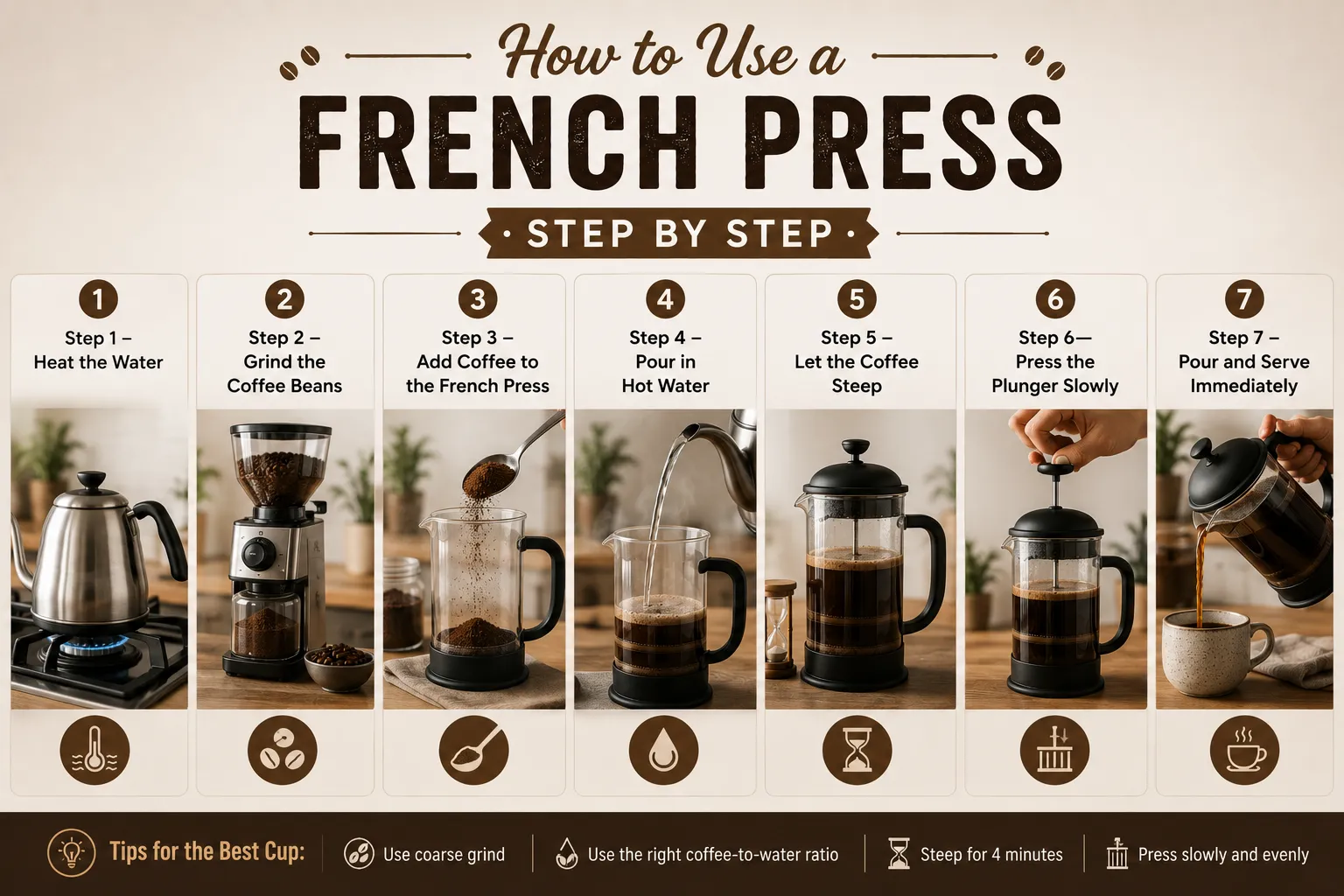
Brewing a great cup takes about six minutes from start to finish. Each step matters, so don’t forget any of them or skip ahead.
Step 1 – Heat the Water
Heat your water to 195°F to 205°F (90°C to 96°C). If you don’t have a thermometer, let the boil settle for about 30 seconds before you pour. A peer-reviewed study published in Scientific Reports confirms that brew water in this window produces balanced extraction without scorching the more delicate flavor compounds.
Step 2 – Grind the Coffee Beans
Use a coarse grind, similar to sea salt in texture. Set your grinder to its coarsest setting, or set it to one click in. Grinding too fine produces bitterness and a silty cup, since fine particles slip through the mesh and over-extract during the steep. Grinding right before brewing gives you the freshest flavor possible.
Step 3 – Add Coffee to the French Press
Measure your ground coffee and add it to the carafe. Place the press on a flat, stable surface near your kettle so you don’t have to move it once brewing starts. A wobbly base is how excellent coffee ends up on the counter.
Step 4 – Pour in Hot Water
Pour slowly so all the grounds get evenly saturated. Pour half first; fill it with just enough water to wet every grain; give it a gentle stir with your spoon; then add the remaining water up to the water line. That short pause is the bloom, and it lets trapped CO₂ escape before the real extraction starts.
Step 5 – Let the Coffee Steep
Standard steeping time is 4 minutes. Three minutes yields a lighter, weaker coffee, and five yields a stronger, bolder one. Put the lid on with the plunger pulled all the way up; this holds heat in while the coffee steeps and keeps the brew temperature steady.
Step 6—Press the Plunger Slowly
Press the plunger down gently. Don’t force it. A slow, controlled plunge prevents bitterness by not disturbing the bed of grounds at the bottom, so less silt makes it into your cup. Some brewers also follow James Hoffmann’s method of waiting a few minutes after steeping to let the grounds settle before plunging for an even cleaner cup.
Step 7 – Pour and Serve Immediately
Pour the coffee right away. Leaving brewed coffee in contact with the grounds, even after pressing, leads to over-extraction and a bitter answer to what could’ve been a perfect cup. If you brewed more than one drink’s worth, transfer the rest to a thermos or separate carafe.
Common French Press Mistakes to Avoid
Most bad French press coffee stems from one of these four mistakes. Fix them, and the rest takes care of itself.
Using Water That’s Too Hot
Pouring boiling water straight from the kettle scorches the beans and draws out harsh, bitter notes from the roast. Always wait about 30 seconds after the boil before pouring.
Grinding Too Fine
Fine grounds turn the cup muddy, making the plunge much harder to push through. The mesh filter is designed for coarse-ground particles, and anything finer slips through the mesh into the cup as sludge.
Steeping Too Long
Over-extraction is the most common cause of bitter flavor, full stop. Once you push past 5 minutes, the water’s done pulling out the good stuff and starts dragging out harsh compounds.
Pressing Too Fast
A fast plunge agitates the bed of grounds and pushes sediment up through the brew. Slow and steady gives you a cleaner cup with noticeably less silt.
Tips for Brewing Better French Press Coffee
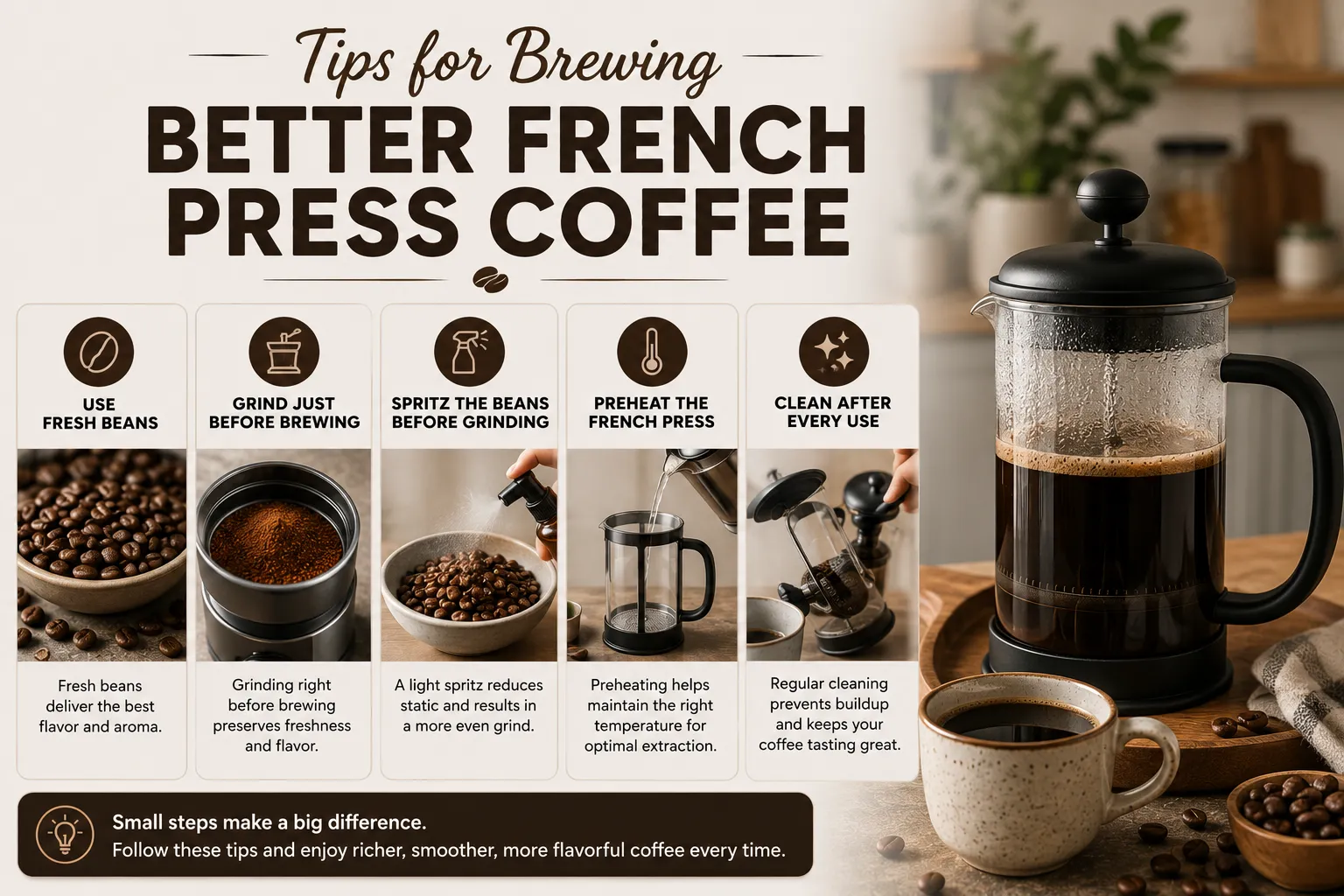
These quick tips can turn an okay cup into a delicious coffee that stands up to a café pour. Once you have how to use a French press figured out at the basic level, these habits are what take your morning brew up a notch.
Use Fresh Beans
Beans roasted within the last two to three weeks have a stronger aroma and brighter flavor. Anything older and the oils degrade, leaving you with stale, flat coffee that no technique can rescue.
Grind Just Before Brewing
Whole beans hold their flavor far longer than ground beans. Grinding right before you brew preserves the oils and CO₂ that carry the aromatic compounds straight into your cup.
Spritz the Beans Before Grinding
A light mist of water on whole beans before grinding cuts static and improves extraction. As Dr. Christopher Hendon, coffee chemist at the University of Oregon, told The Washington Post, “If you’re going to be grinding whole-bean coffee, adding a small amount of water to those whole beans before you grind them will result in the coffee being more accessible when you brew it.“
His team’s research, published in the journal Matter, found that the resulting brew is about 10% more concentrated, resulting in a fresher cup with less coffee wasted.
Preheat the French Press
Add a splash of hot water to the empty carafe and swirl it before you brew. Then dump it. This keeps the brew temperature stable throughout the full four-minute steep, rather than dropping the moment hot water meets cold glass.
Clean After Every Use
Old oils trapped in the mesh filter turn rancid, ruining the next brew. Rinse the press thoroughly after every drink, even when you’re in a rush.
How to Clean a French Press Properly
A clean French press makes better coffee. Here’s the routine that keeps the mesh, plunger, and carafe in working order for the long haul.
| Step | What to Do |
| 1 | Remove used grounds from the carafe |
| 2 | Rinse the glass and plunger with warm water |
| 3 | Wash the plunger mesh to clear trapped fines |
| 4 | Use mild soap, never abrasive cleaners |
| 5 | Dry every part thoroughly before reassembling |
Skipping any of these lets oils build up over time, which dulls the taste of whatever you brew next. The 1st in Coffee team suggests a deeper clean once a week for daily drinkers.
French Press Brew Time Chart
Steeping time is the easiest variable to tweak once your grind size and ratio are dialed in. Use this as your reference:
| Coffee Strength | Steep Time |
| Mild | 3 minutes |
| Standard | 4 minutes |
| Strong | 5 minutes |
Start with 4 minutes, taste what you’ve got, and adjust from there over the next few brews.
Final Thoughts
Using a French press is simple, but small adjustments separate decent coffee from a really great cup. So, how do you use a French press the right way? Coarse grind, water just off the boil, a 1:15 ratio, four minutes of steep, and a slow plunge are the keys. Proper technique combined with fresh beans creates café-quality French press coffee at home; no espresso machine required.
For more brewing guides, fresh beans, and gear that holds up over the years, the 1st in coffee blog has plenty more to read.
Shop the full range at 1st in coffee when it’s time to upgrade your setup.
The Author