Espresso Machine vs Coffee Maker: Which Should You Choose?
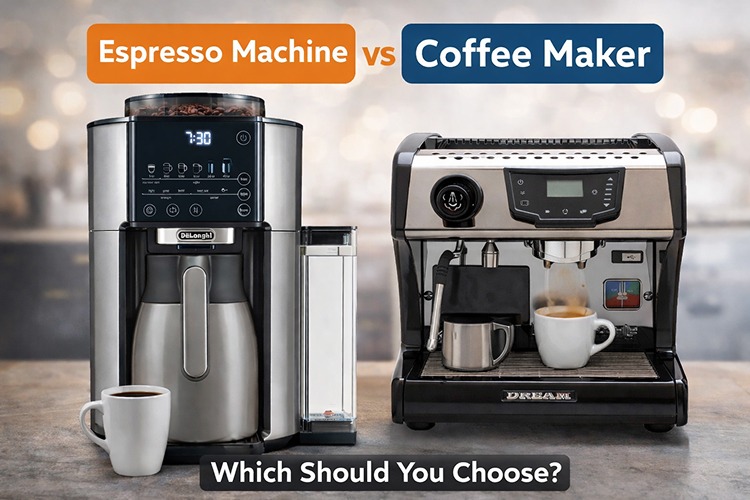
Table of Contents
Shopping for a new way to make coffee at home? The espresso machine vs coffee maker debate comes up constantly, and there’s no one-size-fits-all answer. Some people swear by their drip machine that quietly brews multiple cups every morning, while others can’t imagine life without pulling a perfect espresso shot. Let’s break down everything you need to know so you can make the right call.
What Is a Coffee Maker?
A coffee maker is what most people picture when they think about making coffee at home. These machines sit on countertops across America, quietly doing their job every single morning. They’re designed to brew large batches of filter coffee without much fuss.
How Does a Coffee Maker Work?
The process is straightforward. You add coffee grounds to a filter basket, pour cold water into a reservoir, and hit start. The machine heats water to nearly boiling water temperature, then drips it through the grounds. Gravity pulls the brewed coffee down into a carafe, and you’re done.
Advantages of Coffee Makers
Coffee makers shine when it comes to convenience and quantity. Need to brew enough for the whole family? Done. They’re incredibly easy to use, even before your first cup. Most models are affordable, quiet, and take up minimal space. Cleanup means rinsing a carafe and tossing a filter. They’re also forgiving if you’re not precise with measurements, though getting the proper coffee-to-water ratio improves results.
What Is an Espresso Machine?
Espresso machines create concentrated coffee by forcing hot water through finely ground coffee beans under high pressure. They’re what coffee shops use to make lattes, cappuccinos, and those Instagram-worthy drinks with foam art.
How Does an Espresso Machine Work?
Espresso requires high pressure to force water through the coffee beans. The espresso coffee machine heats water to the perfect temperature, then forces it through tightly packed, finely ground coffee in a portafilter. The whole process takes 25 to 30 seconds and produces a small, concentrated shot with that signature rich brown crema on top. Many machines include a steam wand for frothing milk, letting you create specialty coffee drinks at home.
Advantages of Espresso Machines
If you love espresso-based drinks, nothing else satisfies quite like authentic espresso from a proper machine. Espresso machines offer incredible versatility for making lattes, cappuccinos, and macchiatos. The concentrated flavor and robust flavor are completely different from drip coffee. Super automatic espresso machines can grind beans, pull shots, and froth milk with a button push, while semi-automatic machines give hands-on control. You’ll also use less coffee per drink since each espresso shot is so concentrated.
Coffee Maker vs Espresso Machine: 8 Key Differences That Matter
Now that you know how each machine works, let’s get into the specifics so you can get that perfect cup of coffee… or espresso, whichever you prefer. Here’s a quick comparison chart followed by detailed breakdowns of what actually matters when choosing between these two brewing methods.
| Feature | Coffee Maker | Espresso Machine |
| Brew Method | Drip/gravity | High-pressure extraction |
| Coffee Type | Regular brewed coffee | Concentrated espresso |
| Serving Size | 4-12+ cups | 1-2 shots at a time |
| Speed | 5-10 minutes for full pot | 25-30 seconds per shot |
| Noise Level | 45-55 dB (quiet hum) | 60-70 dB (pump noise) |
| Price Range | $25-$350 | $100-$3,000+ |
| Counter Space | Compact (most models) | Larger footprint |
| Learning Curve | None | Moderate to steep |
| Maintenance | Minimal | Regular descaling required |
1. Flavor Profile, Versatility, and Drink Options
Coffee makers produce traditional coffee with a lighter body that’s perfect for sipping throughout the morning. The flavor is milder, and the volume is higher, ideal for people who enjoy a full mug of regular coffee.
Espresso machines create a concentrated shot with intense flavor and syrupy texture. That concentration makes espresso drinks special. Enjoy it straight as a shot, dilute it with hot water for an Americano, or combine it with steamed milk for endless specialty coffee drinks.
2. Specialty Features
Modern machines come with extras that can make or break your decision.
Built-In Grinders and Milk Frothers: Do You Need One with These?
An espresso machine with grinder simplifies your routine by grinding beans fresh right before brewing. This matters more for espresso because it needs a powder-like grind that’s incredibly fine and consistent. Pre-ground espresso rarely gives the same results.
Built-in frothers are another consideration. If you want barista-style coffee with steamed milk, a quality steam wand is essential. Think about whether you’ll actually use these features regularly or if they’ll just add complexity you don’t need.
3. Noise Levels
Coffee makers operate quietly at around 45 to 55 decibels, basically a gentle hum. Espresso machines are louder, hitting 60 to 70 decibels because of pressure pumps and grinders. If you live in an apartment or make coffee while others sleep, this matters.
4. Serving Size and Quantity
Coffee makers win if you need volume. Most brew four to twelve cups in a single batch, perfect for families or keeping a thermal carafe full. Espresso machines make single or double shots at a time, which is plenty for a latte or cappuccino. But if you’re caffeinating a crowd, you’ll pull shots repeatedly.
5. Counter Space Requirements
Most standard coffee makers have a small footprint, fitting easily on counters. Espresso machines, especially semi-automatic machines with all the features, need significantly more real estate. You’ll want clearance above for the portafilter and room to work. Measure your counter before falling in love with a machine that won’t fit.
6. Learning Curve and Brewing Process
Making drip coffee is simple. Scoop grounds, add water, press button, wait. Espresso is a skill. You need to dial in grind size, dose the right amount of ground coffee beans held in your portafilter, tamp with consistent pressure, and time extraction. Temperature matters. Pressure matters. Manual machines give complete control but require the most skill, while super automatics handle everything automatically.
7. Maintenance and Water Quality Impact
Coffee makers need occasional descaling if you have hard water, plus regular cleaning of the carafe and filter basket. Espresso machines are more demanding. You’ll backflush group heads, descale boilers, clean steam wands after every use, and replace gaskets periodically. Water quality hits espresso machines harder since mineral buildup affects pressure and temperature consistency.
8. Price & Long-Term Cost Comparison
Budget matters. Decent coffee makers start around twenty-five dollars, with good ones topping out around two to three hundred. Entry-level espresso machines start around one hundred dollars, but if you want true espresso, expect to spend at least three hundred to five hundred dollars for a decent semi-automatic. Commercial espresso machine setups for businesses cost even more.
Coffee makers have minimal ongoing costs. Maybe some descaling solution annually. Espresso machines rack up expenses with descaling solutions, cleaning tablets, replacement gaskets, and potentially repair costs. Factor in fifty to one hundred dollars annually for maintenance supplies.
A quality coffee maker typically lasts five to ten years with basic care. Espresso machines vary wildly. Cheap ones might die within a year or two, while quality models from reputable brands can run for fifteen to twenty years with proper maintenance. The espresso machine depends heavily on build quality and care.
Home vs Commercial: Which Category Do You Need?
For home use, think about your daily routine. Do you drink multiple cups throughout the day? Stick with a drip machine. Do you prefer one or two espresso drinks each morning and love the ritual? An espresso machine makes sense.
Volume matters, too. Families with multiple coffee drinkers usually benefit from a drip machine’s capacity. If you’re the only coffee person or everyone wants different drinks, espresso provides flexibility. Commercial settings have different needs. Coffee shops need professional espresso setups for high volume. Offices might be better served by a large-capacity drip machine.
Your personal taste is the final factor. Some people genuinely prefer the smooth flavor of filter coffee over intense espresso. Others find drip coffee boring compared to the complex, concentrated flavor of a properly pulled shot.
Conclusion: Finding Your Path to Better Coffee or Coffee Art
The espresso machine debate really comes down to matching the tool to your lifestyle. If you want simplicity, volume, and classic coffee flavor, a quality drip machine will serve you well. If you’re drawn to espresso drinks and want café-quality results at home, investing in an espresso machine makes sense.
Ready to make your decision? The team at 1st In Coffee can help you find exactly what you need, answer your questions honestly, and make sure you’re set up for success. Check out the selection of coffee makers at their online coffee machine store and get expert guidance that actually helps.
Frequently Asked Questions
Can you use pre-ground coffee in espresso machines?
Technically yes, but results suffer significantly. Espresso needs extremely fine, consistent grinding, and pre-ground coffee loses freshness within hours of grinding.
What is an espresso machine coffee maker?
This usually refers to combination machines that brew both drip coffee and espresso from a single unit. They’re convenient for households with mixed preferences but typically don’t excel at either function.
Can espresso machines produce regular coffee?
Sort of. You can make an Americano by adding hot water to espresso shots, which tastes similar to drip coffee. Some machines have a separate hot water dispenser for pour-over style coffee.
Which brewing method brings the most flavor out of coffee beans, espresso makers or drip coffee machines?
Espresso extracts more compounds from beans due to high pressure, creating intense, concentrated flavor. Drip coffee extracts differently, producing a cleaner cup with subtle notes. “Better” depends on what you prefer.
The Author