Beginner’s Guide: How to Choose the Best Espresso Machine
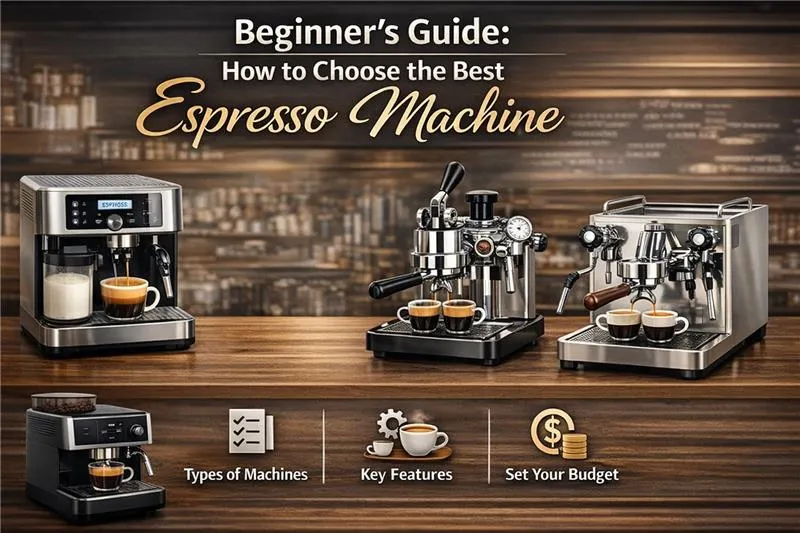
Choosing your first espresso machine is one of the most exciting and overwhelming decisions a coffee lover faces.
Introduction
Whether you want to recreate the feel of your favorite coffee shop right on your counter or you’ve just decided to stop overpaying at the local coffee shop every morning, the journey starts with finding the right machine. The options are wide: from sleek single-serve espresso makers that use pods to hands-on manual machines that demand real technique, and each one suits a very different kind of coffee drinker.
If you’re searching for the best espresso machine for beginners, your choice should come down to your coffee preferences, your budget, and how much effort you want to invest in brewing.
1st in Coffee carries a curated lineup of manual, semi-automatic, super-automatic, prosumer, single-serve, and single-boiler espresso machines, so wherever your home espresso journey starts, there’s a machine built exactly for it.
Why Choosing the Right Espresso Machine Matters
The machine you start with shapes everything from espresso quality and consistency to how quickly you develop real technique.
For an average coffee drinker just getting started, a few factors deserve serious thought. Learning curve is the first: a manual espresso machine puts total control over espresso extraction in your hands, but it demands consistent technique from day one. Automatic espresso machines remove that friction entirely, handling the technical side while you focus on enjoying the result.
Budget matters too. Entry-level espresso machines are surprisingly accessible, though more expensive models typically deliver better temperature stability and pressure consistency. Maintenance is another consideration that’s easy to overlook: some machines require regular drip tray upkeep, descaling, and more hands-on routine cleaning than others.
Counter space is the last one that beginners underestimate. Some setups, especially prosumer and commercial espresso machines, are considerably larger than they appear online.
Matching your beginner espresso machine choice to your lifestyle makes the biggest difference.
Types of Espresso Machines for Beginners
There are three main types of espresso machines: manual, semi-automatic, and super-automatic machines. Here’s what each category offers.
1st in Coffee Manual / Lever Espresso Machines
Manual machines require the user to control the entire brewing process: grinding, tamping, and espresso extraction.
It’s the most hands-on approach available, and for those willing to put in the work, manual machines deliver the best espresso results any home setup can produce. They were, after all, the original design that made high-pressure espresso possible.
| Pros | Cons |
|---|---|
| Full control over espresso extraction | Steeper learning curve than other types |
| Authentic, hands-on espresso experience | Requires a consistent technique for every shot |
| Exceptional build quality, built to last | Physical effort required |
| Highest espresso quality for skilled users | Not ideal for quick, effortless mornings |
Popular models include:
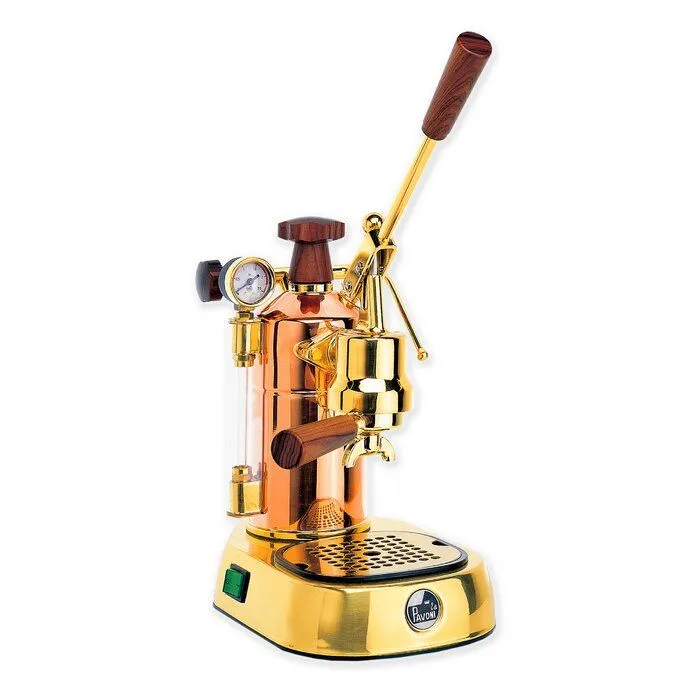
- La Pavoni Professional Copper & Brass: Handcrafted in Italy, this iconic lever machine features a solid copper boiler with a brass base and a 38-ounce capacity, enough for approximately 16 double espressos per fill. A mounted boiler pressure gauge provides real-time feedback on extraction conditions, while the internal thermostat automatically monitors temperature. It’s as much a kitchen statement piece as it is a precision espresso tool.
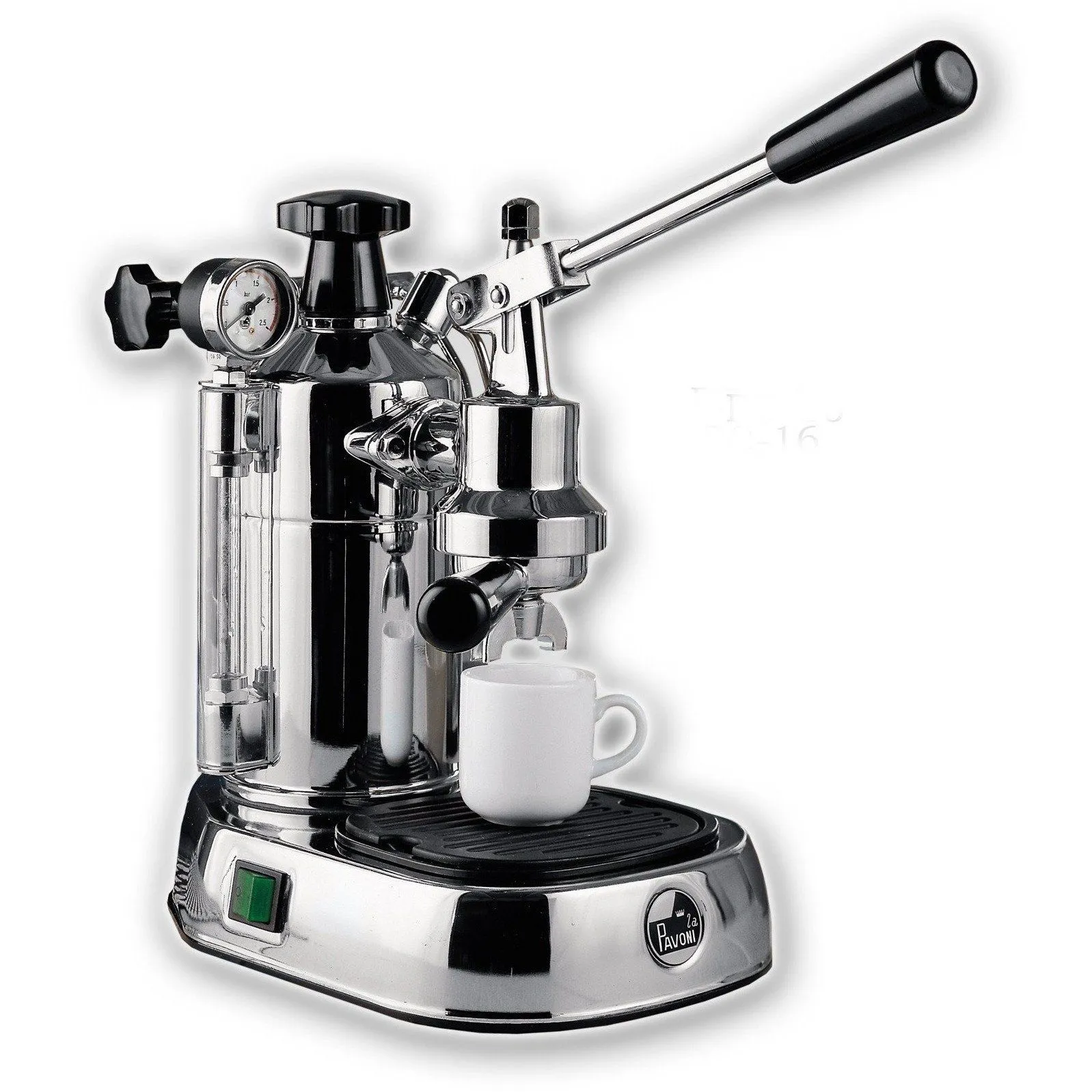
- La Pavoni Professional: The chrome version of the same legendary design, built with a nickel-plated solid brass boiler and commercial-grade stainless steel heating elements for long-term durability. Both the single and double portafilters are included, and a dual frothing system lets you choose between a manual steam wand and an automatic cappuccino attachment. This machine has been in continuous production since 1975, a track record very few home appliances can match.
1st in Coffee Single Boiler Espresso Machines
A single-boiler machine uses a single boiler for both brewing and steaming milk, so you switch between modes rather than run them simultaneously.
That simpler design makes it more affordable, and for a first-home espresso machine, simplicity is genuinely a feature worth appreciating.
| Pros | Cons |
|---|---|
| Simpler, beginner-friendly design | Can’t brew and steam milk at the same time |
| More accessible entry point | Slower workflow for milk drinks |
| Quality espresso with reliable temperature control | Mode switching requires patience |
| Great for learning core espresso skills | Less efficient for busy mornings |
Popular models include:
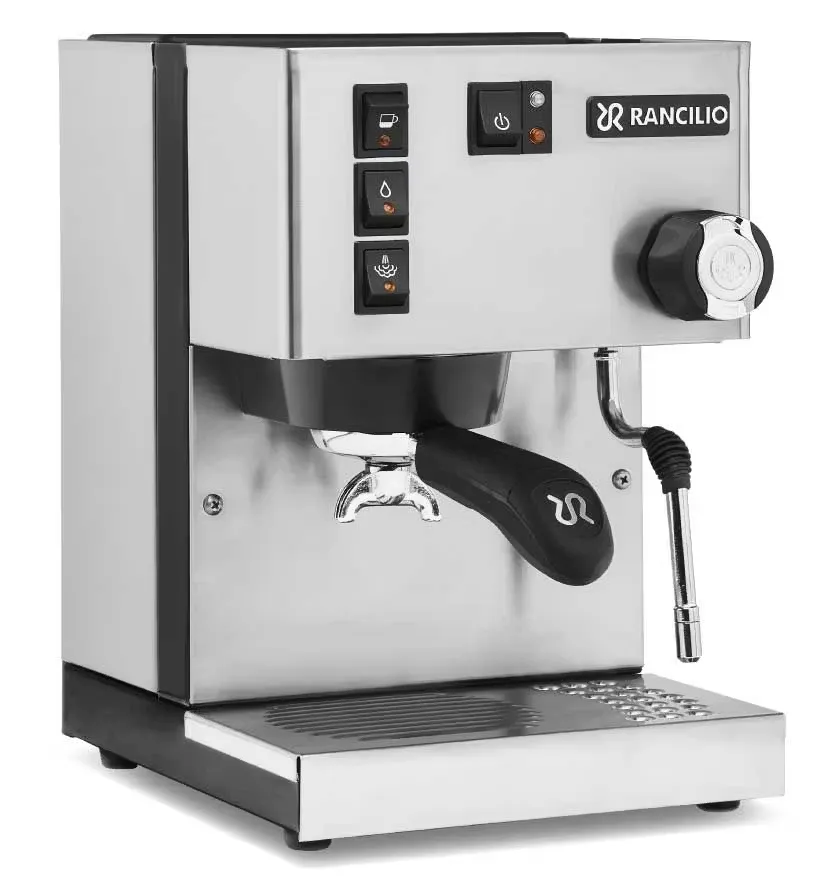
- Rancilio Silvia M V6 Espresso Machine: Widely regarded as the gold standard for home single-boiler machines, the Silvia M V6 features a thermal-wrapped lead-free brass boiler for fast, even heat-up and a commercial-grade portafilter that takes a 58mm basket. The iron frame and stainless steel panels give it a build quality that punches well above its price range. It’s been the benchmark for entry-to-intermediate home espresso for over 20 years.
- Lelit Victoria: A compact, all-brushed-stainless machine built around the Lelit Control Center (LCC), an OLED display system that lets you activate programmable pre-infusion and monitor brew temperature in real time. Manual shot control means you start and stop extraction yourself, making it excellent for learning proper technique. It’s one of the most feature-rich single boiler machines available at its size.
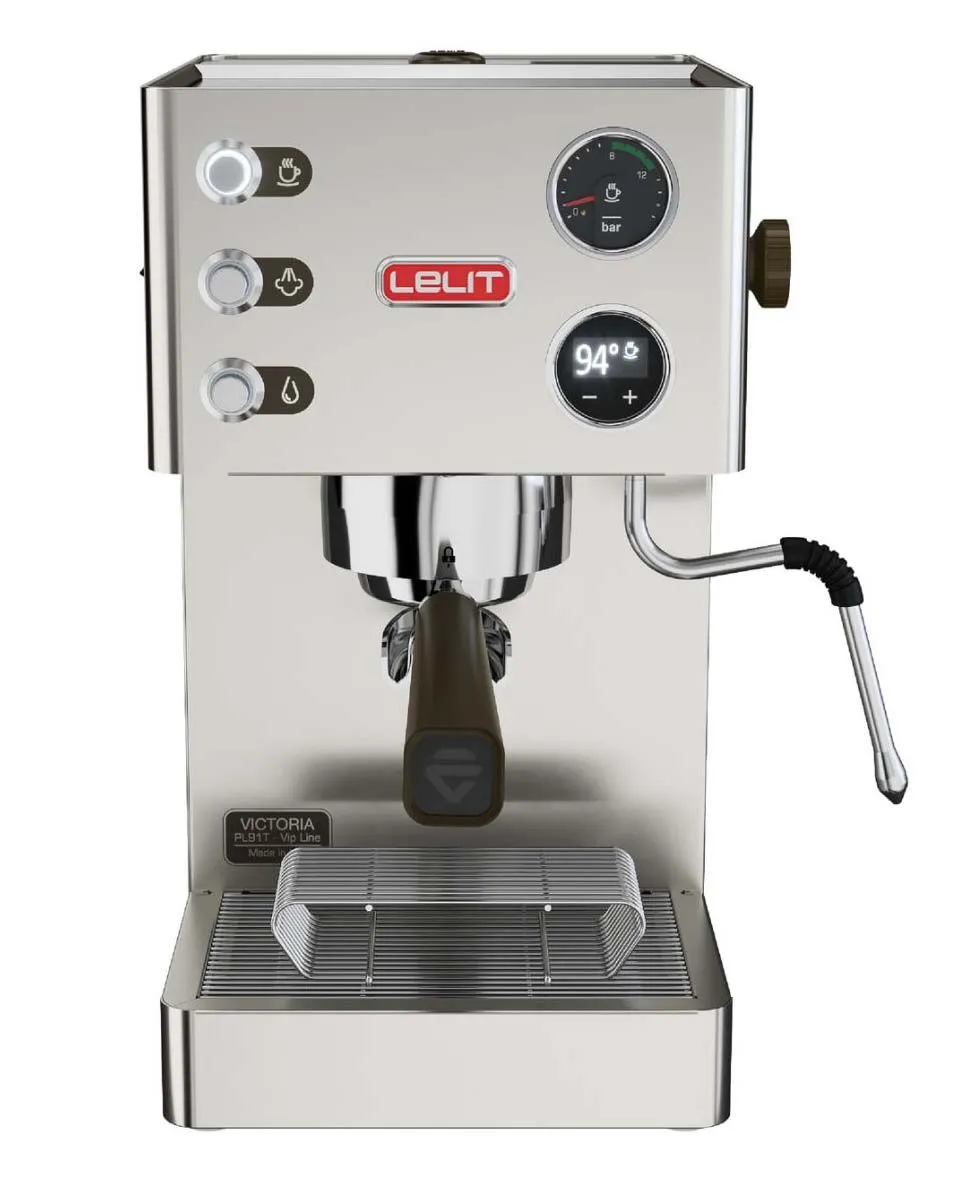
Both are strong picks among entry-level espresso machines.
1st in Coffee Prosumer Espresso Machines
Prosumer machines borrow technology from the commercial espresso machine world to deliver genuine café-quality espresso at home.
They typically feature PID temperature control, which ensures the machine maintains stable water temperature for consistent extraction and flavor, along with a pressure gauge that lets you fine-tune every single shot.
| Pros | Cons |
|---|---|
| Superior espresso quality and temperature stability | Higher price point |
| PID, pressure gauge, advanced feature set | Larger footprint, needs more counter space |
| Excellent for milk-based espresso drinks and latte art | Slight learning curve |
| Long-term investment for serious enthusiasts | More than most true beginners need |
Popular models include:
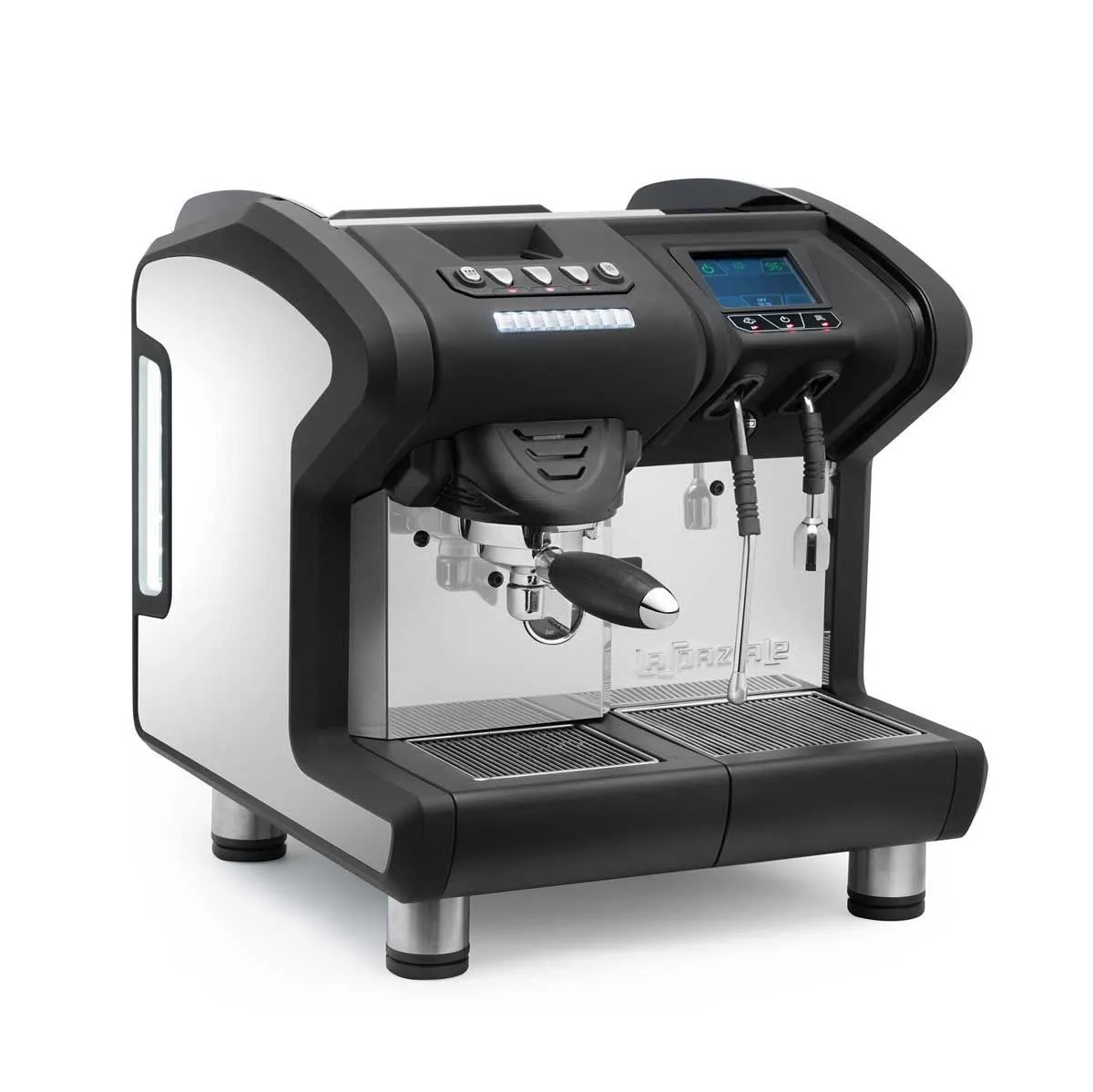
- La Spaziale S11 Brio: Dual boilers paired with an advanced digital touchscreen interface bring commercial-grade control to the home kitchen. Independent PID temperature regulation on both the brew and steam boiler means you’re pulling shots at precise, stable temperatures every single time. It’s one of the most sophisticated prosumer machines available, like the kind of setup you’d normally only find in a professional café environment.
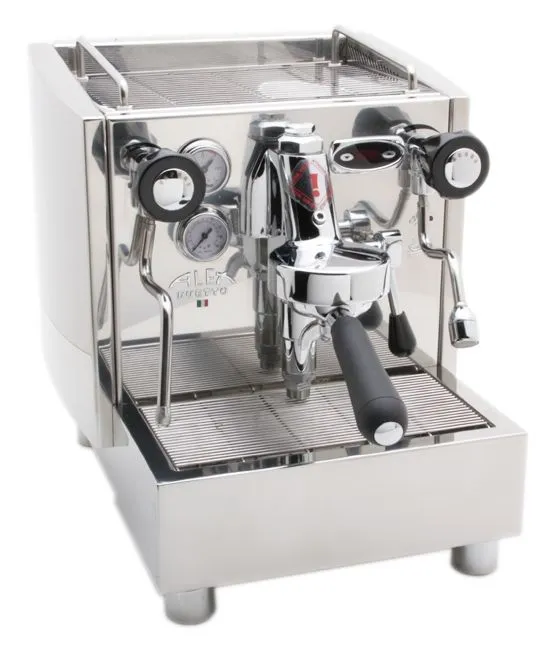
- Alex Duetto IV Plus by Izzo: Built in Naples, Italy since 1979, the Duetto IV Plus features dual stainless steel boilers with PID temperature control adjustable by a single degree at a time. The legendary E61 group head maintains consistent brew temperature through thermosiphon circulation, and the rotary pump runs quietly enough that it won’t disrupt your kitchen.
These are built for the coffee geek ready to commit to pulling great espresso shots with full barista-level control and willing to invest accordingly.
1st in Coffee Super-Automatic Espresso Machines
Super-automatic machines handle the entire espresso-making process: grinding, dosing, tamping, brewing, and often automatic milk frothing, too.
For a beginner who wants consistent café-quality drinks without a steep learning curve, a fully automatic espresso machine is the most accessible option. Press one button. Get your drink.
| Pros | Cons |
|---|---|
| One-touch brewing, minimal effort required | Higher cost than semi-automatic options |
| Consistent results with every espresso shot | Less hands-on control over extraction |
| Built in grinder — no separate grinder needed | Results may feel less nuanced than manual |
| Automatic cleaning cycles simplify upkeep | Requires decent counter space |
Popular models include:
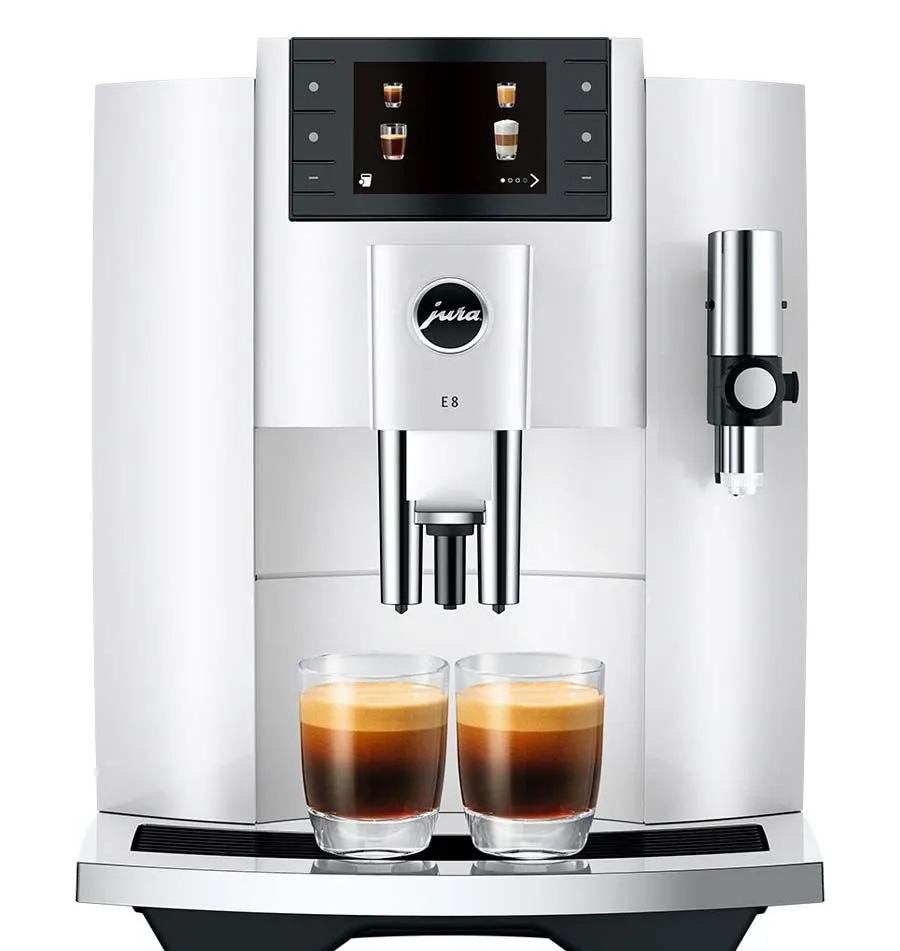
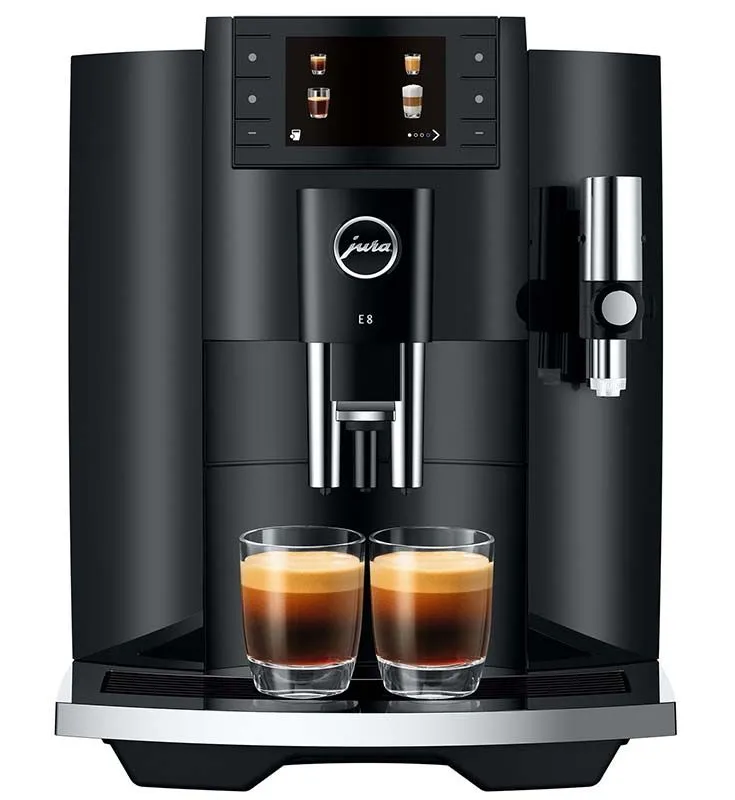
- JURA E8 White: JURA’s signature Pulse Extraction Process (P.E.P.) sets this machine apart: it forces hot water through coffee grounds at short intervals to fully develop aroma, a process JURA describes as the only one of its kind in the world. The six-level AromaG3 grinder grinds fresh beans for every shot, and the machine handles 17 specialty drinks from ristretto to flat white to latte macchiato at the touch. A 64-ounce front-accessible water tank and integrated cleaning programs make daily use genuinely effortless.
- JURA E8 Black: Identical in performance to the White, with the same P.E.P. brewing system, AromaG3 grinder, and TFT color display, just with a sleek black finish for those who prefer a bolder kitchen aesthetic. Eight intensity levels let you customize coffee strength, and the machine can prepare two espressos simultaneously. The automatic milk spout is dishwasher-safe, keeping milk-drink hygiene simple.
JURA machines consistently rank near the top of espresso machine reviews for their integrated grinder quality, temperature stability, and how effortless the espresso-making process becomes day to day.
1st in Coffee Single-Serve Espresso Machines
Single-serve machines use pods or capsules to deliver a decent espresso shot with virtually no effort. For anyone wanting a compact machine as their first espresso machine, this format is unbeatable for convenience.
| Pros | Cons |
|---|---|
| Compact, easy to clean, low maintenance | Limited control over espresso strength |
| No grinding, tamping, or measuring needed | No steam wand for milk-based drinks |
| Fast, consistent, practically no learning curve | Pod costs add up over time |
| Great for ground coffee and pod variety | Less flexibility in espresso taste |
Popular models include:
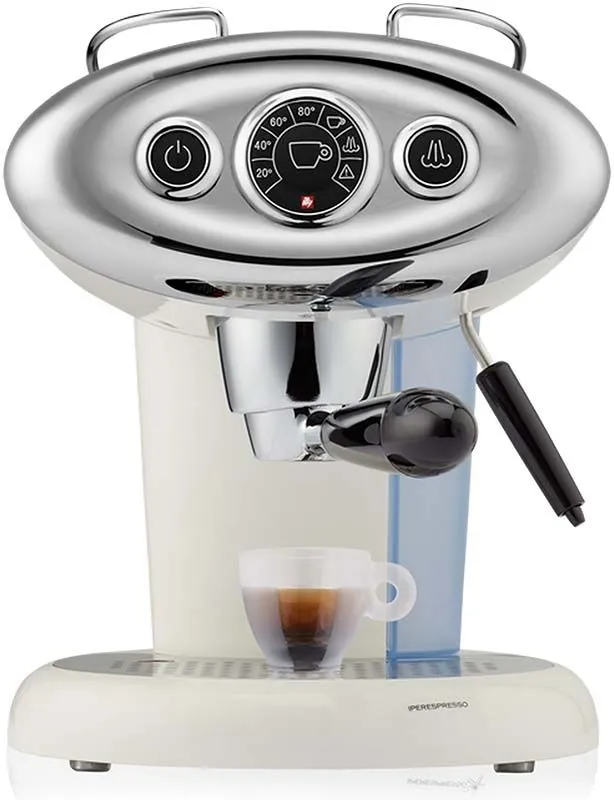
- Illy X7.1 iper Black: This machine uses illy’s patented two-stage iperEspresso capsule system, where extraction happens entirely inside the capsule rather than through the machine itself. The result is intensely aromatic, full-bodied espresso with rich crema, and because coffee never contacts the machine’s internal components, cleanup is minimal. It was designed by renowned Italian architect Luca Trazzi, so it’s also genuinely beautiful to look at on your counter.
- Illy X1 Anniversary ESE Pods & Ground Espresso: A versatile option that accepts both ESE (Easy Serving Espresso) pods and loose ground coffee, giving you more flexibility than a standard capsule machine. It’s an ideal starting point for anyone who wants to experiment with different coffee beans and grind profiles without committing to a full semi-automatic workflow. The optimized pressure system and auto-stop feature keep extraction consistent whether you’re using pods or freshly ground coffee.
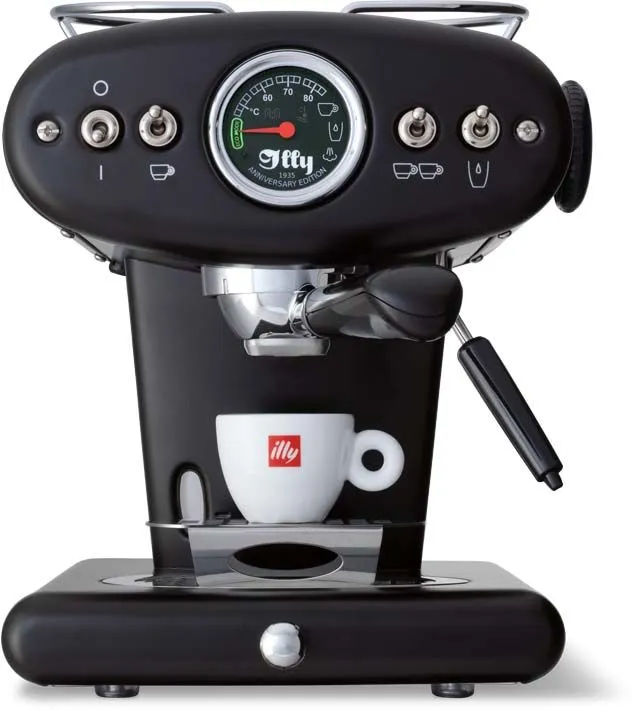
Illy uses high-quality coffee beans in their pods, so the espresso taste stays consistent even without any hands-on brewing..
How to Choose the Best Espresso Machine for Beginners
The right espresso machine comes down to matching your real lifestyle with the right setup.
According to the Specialty Coffee Association’s espresso standards, optimal espresso is prepared at 195–205°F with 9–10 atmospheres of pressure, meaning temperature control and steam pressure are non-negotiable variables, regardless of which machine you choose.
| Factor | What to Consider |
|---|---|
| Ease of use | Automatic espresso convenience vs. hands-on semi-automatic machine control |
| Counter space | Prosumer and commercial machines are larger — measure your space first |
| Budget | Include the cost of a quality grinder or a separate grinder in your budget |
| Maintenance | Descaling schedule, coffee grounds cleanup, drip tray routine |
| Coffee style | Latte lovers need a capable manual steam wand or an automatic steam wand |
For a true all-in-one setup, an espresso machine with a grinder eliminates the need for a separate grinder and simplifies the entire espresso brewing workflow.
Tips for Getting the Perfect Espresso at Home
Good espresso brewing is about more than the machine. These fundamentals separate decent espresso from genuinely great espresso shots, including a few things most beginner guides quietly skip.
James Hoffmann, 2007 World Barista Champion and author of The World Atlas of Coffee, explained in an interview with WBUR’s Here & Now: “If you can invest just a little bit one time in a grinder that’s going to unlock coffee brewing for you, you’ll be able to brew better, buy more variety, get better value for money, and it makes coffee a whole heap of fun.”
- Grind size and freshness are where it starts. Ground coffee loses its best flavors within 24–48 hours of grinding. Invest in a quality espresso grinder or a machine with an integrated grinder, and the difference is immediate.
In serious home espresso circles, investing more in your coffee grinder than your espresso machine is practically conventional wisdom. A quality grinder produces consistent, fine grounds that directly impact every aspect of espresso extraction. For all-in-one simplicity, superautomatic machines with an integrated grinder handle the process automatically. - Understand your brew temperature and steam pressure. Use hot water that’s fully stabilized—not just the moment the ready light activates. Single-boiler machines especially benefit from extended warm-up for proper temperature control.
PID-equipped machines handle this stabilization automatically. Always use filtered water to minimize your need for descaling. - Clean on schedule, every time. Empty the drip tray daily, rinse the portafilter after every use, and descale regularly. Machines with automatic cleaning cycles make this easier, but no machine cleans itself completely.
Milk frothing residue in a milk frother or steam wand is one of the fastest ways to ruin your next cup. - Keep your portafilter inside the machine when idle: Pulling it out drops your brew temperature instantly. Tamping consistency beats tamping force every time. And for milk drinks, milk frothing depends as much on technique as on the machine: cold, fresh whole milk and a properly purged automatic or manual steam wand will froth milk far better than any warm, stale milk ever will.
A fantastic espresso machine is only as good as the habits you build around it.
Conclusion
Every home barista starts with a first home espresso machine. The goal isn’t finding the perfect setup on day one; it’s finding your favorite espresso machine for where you are right now, then growing from there.
From manual machines that build real barista technique to fully automatic espresso machines that deliver café-quality espresso at the push of a button, there’s a right starting point for every beginner. Explore the options, experiment with what works, and enjoy the process. That’s where the magic of home espresso lives.
Subscribe for more tips, guides, and exclusive deals on espresso machines delivered straight to your inbox.
The Author